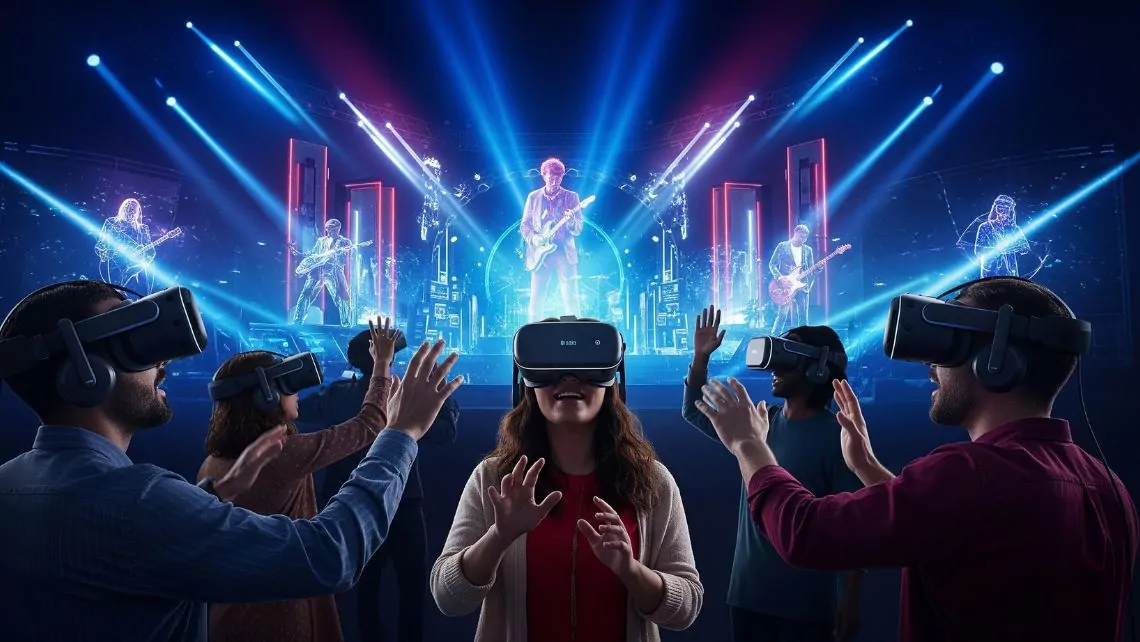
The Entertainment Industry is transforming with the advent of Virtual Reality Experiences (VR), delivering exciting and immersive digital experiences. People can now experience as if they are part of the action rather than watching a movie, playing a traditional video game, or watching a live event on a screen. VR headsets, motion controllers, and interactive software applications enable users to interact with virtual environments and experience entertainment in entirely new ways.
Virtual Reality Experiences are exploring new avenues for entertainment, whether playing games, watching movies with interaction, enjoying virtual concerts, or even visiting virtual theme parks. As the technology evolves further, it is playing an increasingly significant role in the digital entertainment industry.
What is a Virtual Reality Experience?
Virtual Reality experiences are simulations of real-world environments and activities that are created using a computer. These experiences are powered by special devices that give the sensation of being in the virtual world.
Users can discover underwater environments, visit imaginary places, play virtual sports, experience thrilling adventures without leaving their homes, and more.
VR technology is a combination of visual effects, audio, movement tracking, and interactive elements that makes digital experiences more realistic and engaging.
How Is VR Transforming the Entertainment Industry?
Moreover, VR is transforming various forms of entertainment by providing interactive and personalized experiences.
1. Making Video Games More Immersive
Virtual reality is having a significant impact on the gaming industry. Conventional video games are played on a screen where players use a keyboard, mouse, or controller to interact with the game.
VR doesn’t offer the same experience. Players can step into virtual environments, turn their heads to see what’s around them, and use their motion controllers to interact with objects.
This helps the games to be more realistic and exciting. VR is giving gamers a fresh approach to digital entertainment, whether it’s adventure games or sports simulations.
2. Creating Interactive Movie Experiences
Virtual Reality experiences are also transforming the viewing of movies and storytelling. People can see events through the static point of view of classic films.
Virtual Reality entertainment allows people to explore scenes and see around virtual environments. Whether viewers are able to select where to look or interact with a story element in some experiences.
This provides viewers with a new method to connect with digital material and makes the story more interesting.
3. Live Concerts and Music Events are enhanced.
Music fans now have new options in VR. Individuals may take part in virtual concerts, tour electronic stages, and actually enjoy shows in immersive surroundings.
Artists can take advantage of virtual events to reach audiences that are unable to attend concerts.
There will also be interactive music environments, virtual meet-and-greet moments, and digital performances from various perspectives to enjoy.
4. Bringing Virtual Theme Parks to Homes
Theme parks have many rides, adventures, and interactive attractions. With virtual reality, it is possible to enjoy these digital wonders at home.
Users can experience VR roller coasters, fantasy world tours, and simulated activities with a VR headset.
These experiences allow for fun without having to go to the amusement parks.
5. Changing Sports and Fitness Entertainment
Virtual reality is also becoming popular in sports-related entertainment. Users can engage in virtual boxing, cycling, tennis, and other interactive activities.
There are also some Virtual Reality Experiences applications that combine exercise with gaming, making exercise more fun.
Moreover, sports fans can immerse themselves in simulated stadiums and savor sporting environments from various perspectives.
What Are the Benefits of Virtual Reality Entertainment?
Virtual reality has a number of benefits that make entertainment more interactive and fun.
- Immersive Experiences: Users feel more connected to digital environments.
- Interactive Entertainment: Users can interact rather than just view content.
- Entertainment at Home: VR enables users to experience various virtual activities without the need to travel.
- Personalized Experiences: Some applications will provide the option to personalize the virtual environment.
- Creative Storytelling: VR opens new ways for movies and digital stories to be interactive.
- Social Interaction: Multiplayer VR experiences enable people to connect with others and participate in activities with them.
All these advantages are making VR an intriguing choice for contemporary entertainment.
What Equipment Is Needed for Virtual Reality Experiences?
For virtual reality entertainment, there is a need for VR-compatible hardware and software.
VR Headsets
VR headsets are the primary devices to access virtual environments. Represents digital images to the user and monitors head motions.
Motion Controllers
Motion controllers enable people to interact with virtual objects, play games, and do various things.
Gaming Computers or Consoles
To ensure high-quality graphics and performance, some VR applications demand compatible computers or gaming systems. There are a number of VR experiences that can be used without a dedicated computer, however.
VR Applications
Users have to use appropriate applications or games to explore virtual environments. This can include entertainment sites, interactive experiences, sports simulations, and virtual tours.
What Are the Challenges of VR Entertainment?
Virtual reality has great potential, but it has its limitations as well.
There is a big expense with equipment. Purchasing a good virtual reality headset and accessories could be costly for certain people.
One of the other concerns is motion sickness. During long VR sessions, some people may feel dizzy or get a headache or eye strain.
It can also depend on the type of VR device and platform. Also, a few people may not like to wear headsets for long periods.
Other key issues include privacy and data security, as some VR systems are capable of capturing movement and interaction data.
What Is the Future of Virtual Reality Experiences?
There is great potential for virtual reality entertainment in the future. VR experiences could be more realistic and comfortable thanks to enhanced display technologies, motion tracking, graphics, and wireless connectivity.
AI could also contribute to the development of more intelligent virtual characters and personalised entertainment.
It may enable people to experience concerts more interactively, make virtual trips, create a social entertainment venue, and experience the simulated world of games in the future.
Virtual Reality Experiences might be more of an everyday form of entertainment in the future as it becomes more available and content libraries grow.
Conclusion
VR Experiences are redefining entertainment by giving people the opportunity to travel to virtual worlds, play interactive games, enjoy virtual concerts, and engage in exciting activities from home.
While equipment expenses, motion sickness, and privacy are still issues, the technology is making it possible for new opportunities to arise in the business.
VR is not just about watching or playing entertainment content; it’s about experiencing it. With the continued advancement of technology, virtual reality will continue to deliver even more immersive and interactive entertainment experiences.
Frequently Asked Questions (FAQs)
1. What are VR Experiences?
Virtual reality experiences are immersive simulations that enable users to interact with a virtual environment created by a computer, typically through the use of a VR device.
2. What role is VR playing in the Entertainment industry?
VR is transforming entertainment with games, movies, concerts, virtual theme parks, and virtual sports.
3. What devices should be used to enjoy VR entertainment?
A VR headset, compatible controllers, and VR applications are required for users to use. There may also be games that require a gaming computer or console.
4. Is there a way I can have virtual reality experiences at home?
Many VR headsets allow home entertainment, such as playing games, touring homes and cities, and interacting with movies, exercises, and social events.
5. So, what’s the future of VR entertainment?
There is a possibility of more realistic virtual games, interactive concerts, AI-powered experiences, virtual social spaces, and better digital storytelling in the future.